Based on past experiences of leadership transitions, Kevin Warsh, the chairperson of the Federal Reserve, is expected to take office in May. This change of leadership may bring new volatility to the US stock market.
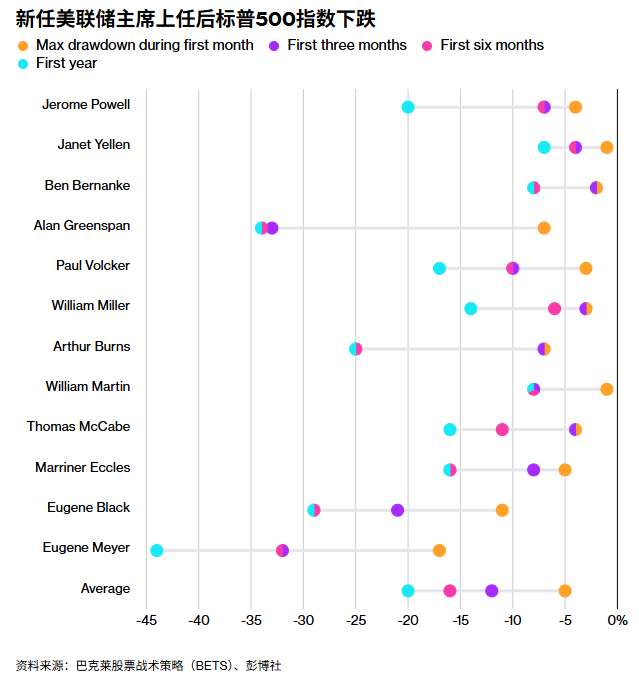
According to data compiled by Alexander Altmann, global head of equity tactical strategy at Barclays, since 1930, the S&P 500 has fallen by an average of 5%, 12%, and 16% in the first month, three months, and six months after a new Federal Reserve chair takes office. These declines even exceed the typical peak-to-trough declines of the S&P 500 in any random year.
In his report to clients, Otterman wrote: “Although the market may be concerned about whether Mr. Warsh is regarded as a ‘hawk’, the real test is more likely to come after May. New Fed chairmen usually face a certain degree of ‘test’ from the stock market in the first six months of their tenure.”
U.S. stocks fell on Friday after reports that President Donald Trump has nominated Kevin Warsh to replace Jerome Powell, as traders view him as the least dovish of all the candidates. Warsh served as a Federal Reserve governor from 2006 to 2011.
If confirmed by the Senate, Waller will face market concerns over the Fed’s independence, as Trump has repeatedly attacked Powell, claiming that he has not eased monetary policy fast enough.
Wash was previously known as a hawk during his tenure at the Federal Reserve, but now he has aligned with the president’s stance and publicly advocated for lowering interest rates. He also stated that the Federal Reserve should reduce its bond holdings and re-examine its economic models.
The leadership change will heighten the already considerable uncertainty over the direction of monetary policy, which has been pulled in two directions by high inflation and signs of a cyclical cooling in the job market.
Christopher Harvey, head of equity and portfolio strategy at CIBC Capital Markets, said that pushing the Federal Reserve to shed some of its asset holdings on its balance sheet (which would drain liquidity from the financial system) could have a negative impact on risky assets.
On the other hand, Michael Wilson of Morgan Stanley wrote in a note to clients on Monday that Wall’s reputation as a balance sheet hawk could also help cool gold prices and provide a modest boost to the dollar, “buying time for broader policy goals to play out as expected.”