US President Donald Trump said that the United States will offer insurance guarantees and naval escorts to ensure the safe passage of oil tankers and other vessels through the Strait of Hormuz, aiming to prevent an energy crisis that could be triggered by a potential war with Iran.
Trump said on Tuesday that the US International Development Finance Corporation would offer insurance at “very reasonable prices” to help ensure the smooth flow of energy and other commercial trade in the Gulf region. Additionally, he stated that “if necessary, the US Navy will start escorting oil tankers through the Strait of Hormuz as soon as possible. In any case, the US will ensure that energy flows freely to the world.”
After the announcement, the oil price increase briefly dropped, and the global benchmark Brent crude oil price was close to $80 per barrel after settlement. Although the president’s statement eliminated part of the risk premium in the energy market, traders still doubted whether the plan could quickly restore the oil supply in the region to normal levels.
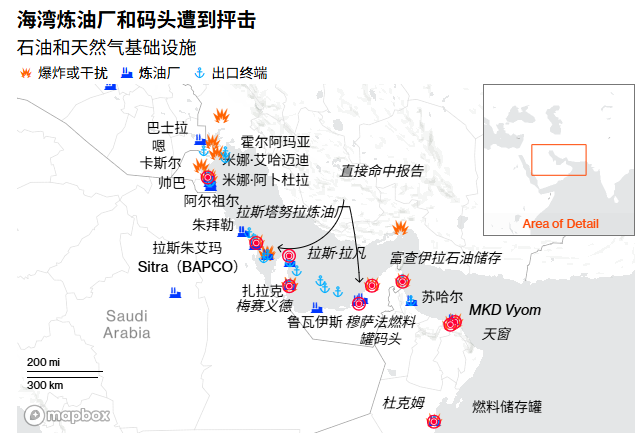
Since the United States and Israel began attacking Iran over the weekend, oil prices have soared by more than 10%, causing widespread chaos in the Middle East and effectively blocking the flow of oil through the crucial Strait of Hormuz, through which one-fifth of the world’s energy supply passes.
Trump’s post did not elaborate on the insurance mechanism that the US International Development Finance Corporation (DFC) will provide. The DFC is an institution aimed at mobilizing private capital for developing countries and reducing investment risks in poor nations.
Political risk insurance, such as that offered by the U.S. International Development Finance Corporation (DFC), can help cover losses resulting from war, violence, and other political unrest.
DFC later said in a press release that it would provide support to commercial shipping charterers, shipowners and major marine insurers to minimize market disruption and help ensure the free flow of goods and capital. DFC suggested that the relevant parties contact DFC directly, but did not provide more details.
The statement may help soothe traders, but it will take some time to implement escort and insurance measures, said Bob McNally, president of Rapidan Energy Group and a former White House official. “The U.S. military first needs to curb Iran’s ability to lay mines and use anti-ship cruise missiles and drones to attack ships,” McNally added in an email.
He said, “Assuming Tehran decides to continue fighting, even with the announced plans to help provide insurance or escort vessels, we expect the full restoration of the Strait of Hormuz to take weeks rather than hours or days.”
There are still some uncertainties regarding Trump’s proposal to offer insurance to shippers willing to pass through the Strait of Hormuz. First of all, it is not clear how many shippers will purchase this insurance, nor is it clear what kind of premiums the US International Development Finance Corporation (DFC) will offer.
“The amount of insurance premiums charged by the U.S. International Development Finance Corporation (DFC) may reflect the level of risk the company perceives,” said Salar Ghaemmaghami, a professor at Pennsylvania State University and founder of Global Policy Advisors, a sovereign wealth fund consultancy. “It is particularly important to compare this premium with those offered by the private market.”
This might be an unprecedentedly arduous task, one of such magnitude that it is likely an area DFC has never ventured into before. According to a person familiar with the matter, the closest DFC has come to providing insurance before was offering political risk insurance to Ukraine after Russia’s invasion, but that was only for new projects, not existing assets.
“If they can actually establish an insurance plan before the war ends – which means the war will last more than six weeks – they will provide insurance for a large amount of oil shipments to China and other parts of Asia,” said Peter Harrell, a non-resident scholar with the Carnegie Endowment for International Peace’s U.S. Foreign Policy Program.
It is certain that a large number of subscriptions to the insurance products of the US International Development Finance Corporation (DFC) may be a positive signal indicating that the war has been brought under control.
“If many companies purchase this kind of insurance, it indicates that they fully trust the US government to fulfill its obligations when they need to cash in the insurance money,” said Galamani. “This might mean that they generally consider it a signal that the risks will decrease over time.”
Trump’s decision to put the U.S. International Development Finance Corporation (DFC) in the spotlight further demonstrates the institution’s significance within the federal government. Galamani said that issuing risk insurance during the war has further solidified the agency’s influence in foreign policy and its potential as a sovereign wealth fund. Just a few weeks ago, the DFC had issued a memo to its employees, expressing its hope to be more like a sovereign wealth fund.


