Morgan Stanley said that as the interest rate gap between the United States and Europe narrows and the Iran war curbs economic growth, the US dollar will weaken.
Since the US and Israel launched attacks on Iran on February 28th, the US dollar has strengthened, benefiting from its status as a safe-haven currency and the currency of the world’s largest energy producer.
Since the outbreak of the war, the US dollar index has risen by 2%, reaching its highest level since December last year on Monday. Meanwhile, the euro and the Japanese yen have fallen by more than 2% during the conflict as both the US and China rely on energy supplies from the Middle East.
A rebound to this level is more likely to be a “bull trap” – a deceptive ploy where the price movement lures investors in, only to reverse suddenly, a team of strategists led by David Adams wrote in a report on Wednesday. The market has factored in the inflation risk from rising energy prices, but still “underestimates its negative impact on economic growth”.
The soaring energy prices have exacerbated inflation risks and prompted traders to factor in expectations of interest rate hikes in Europe, whereas before the war they were betting on rate cuts there.
Strategists say: “The interaction between inflation and growth is a tricky issue for central banks. As they need to balance these competing forces, policy outcomes will also vary.”
Morgan Stanley believes that the Federal Reserve may overlook the “temporary inflation shock”, focus on economic growth, and predicts that the Fed will cut interest rates twice this year. In Europe, strategists expect the European Central Bank to raise interest rates by 0.5 percentage points “to deal with inflation”.
They said: “Interest rates could cause changes in the dollar, both in absolute terms and relative to market pricing.”
Morgan Stanley agrees with Citadel Securities, which earlier this week said that investors are beginning to shift their focus from the initial inflation shock to its impact on global economic growth.
Technical analysis:
The functions of WeChat may be restricted from time to time. If you want to experience the plugin, please leave your contact information when adding a friend so that we can add you back easily!!!
Gold: Overnight, gold fluctuated between 4500 and 4580, correcting the previous rebound from around 4400. For today, the price needs to effectively stabilize above 4550/4560 to further challenge 4600. For detailed positions, please consult the plugin.
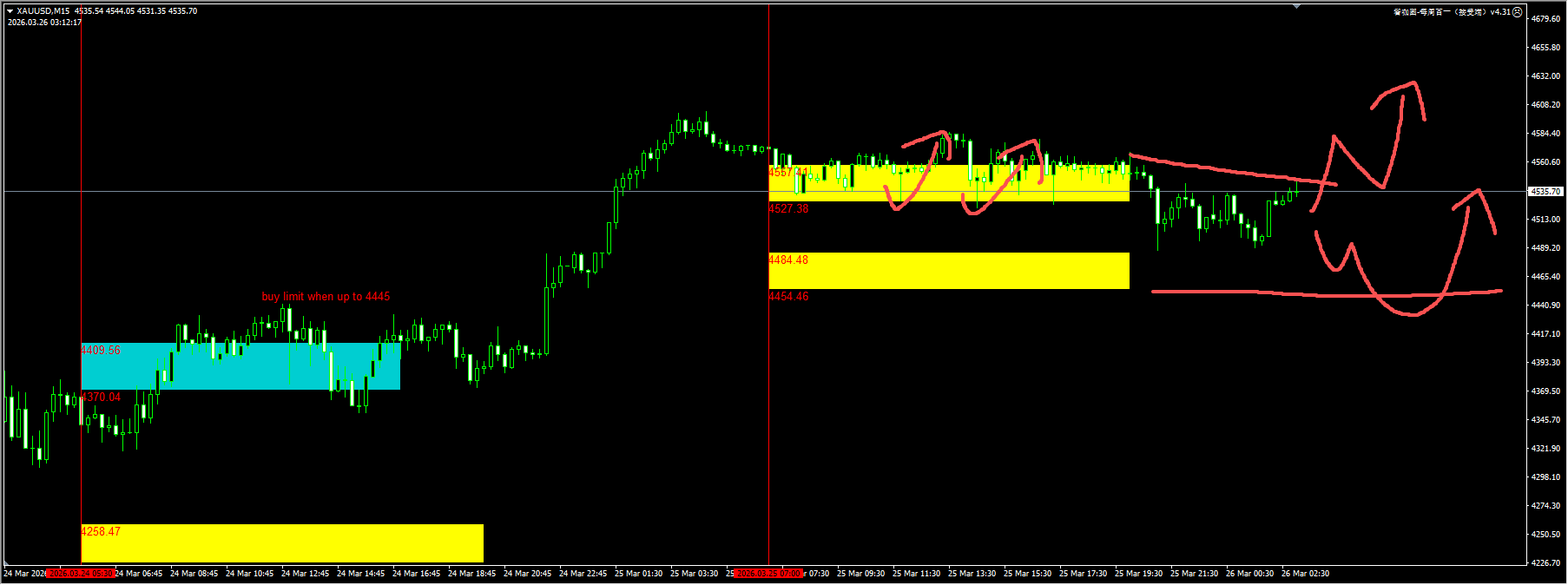
(Gold 15-minute chart)
The plugin is updated from 12:00 to 13:00 every trading day. If you want to experience the same plugin as shown in the chart, please contact V: Hana-fgfg and leave your contact information for us to get back to you.
Nasdaq: The price has entered a third day of sideways consolidation, currently fluctuating around the 24,000/24,100 level. Today, we closely monitor whether a dip to around 23,900, where there is significant liquidity, will bring about a new short-term direction. For detailed positions, please consult the plugin.
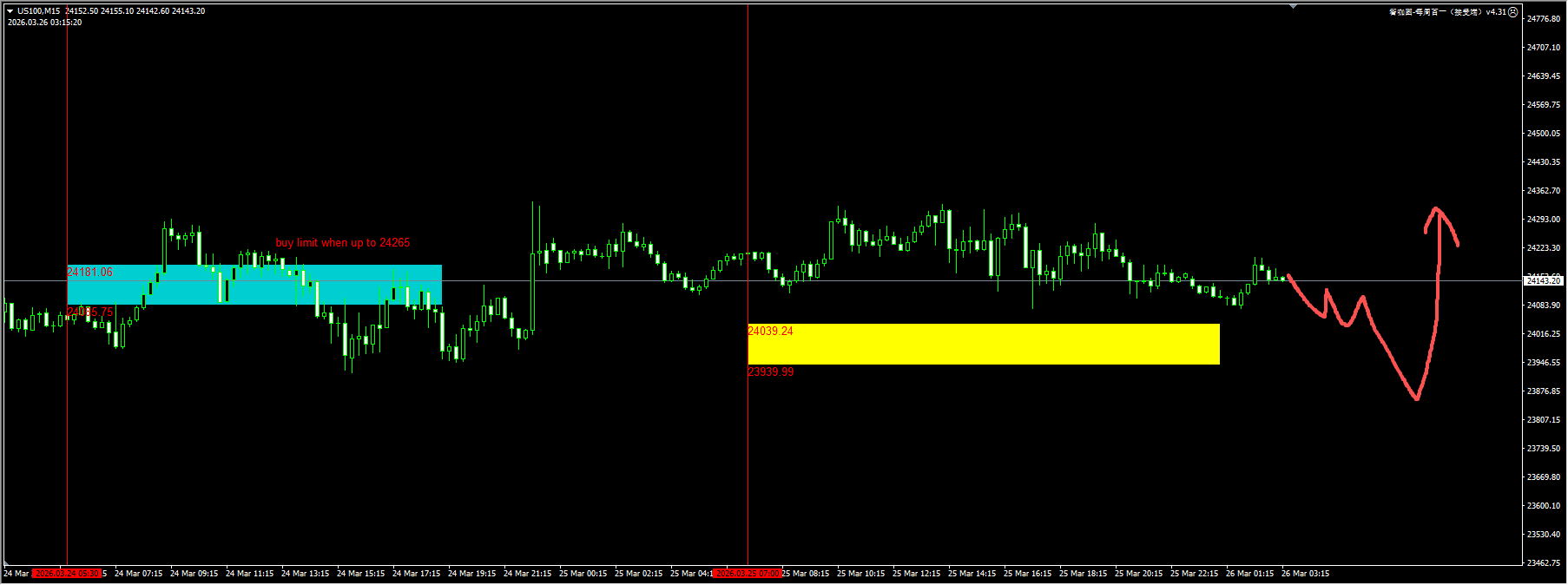
(NASDAQ 15-minute chart)
The plugin is updated from 12:00 to 13:00 every trading day. If you want to experience the same plugin as shown in the chart, please contact V: Hana-fgfg and leave your contact information in the message for us to get back to you.
Crude oil: Iran refused to respond to Trump’s taco deal remarks. Oil prices have gradually returned to the upper-middle position from the range of 85-95. We will continue to focus on the pullback operation after the intraday liquidity sweep. For detailed positions, please consult the plugin.
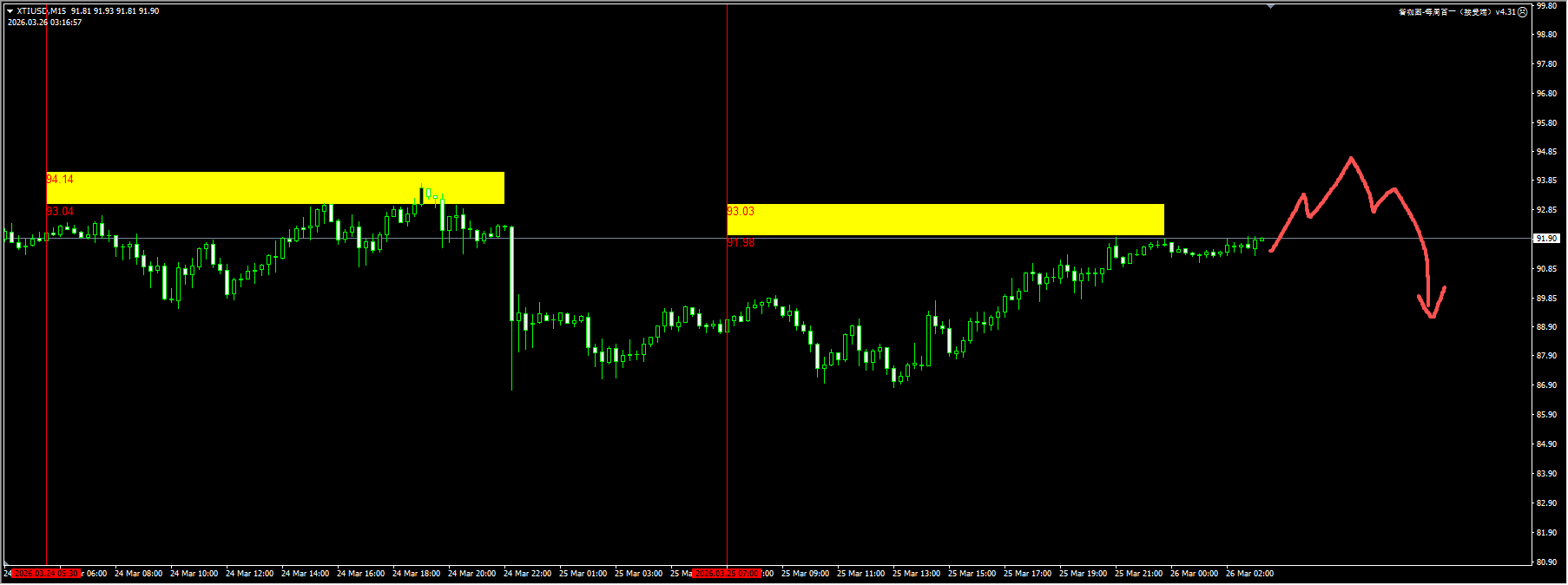
(Crude Oil 15-Minute Chart)
The plugin is updated from 12:00 to 13:00 every trading day. If you want to experience the same plugin as shown in the picture, please contact V: Hana-fgfg and leave your contact information in the note for us to get back to you.
