Federal Reserve Chair Kevin Warsh will deliver his first major speech since taking the helm of the world’s most influential central bank, delivering the opening address on Friday morning at 10 a.m. New York time.
The event is gradually becoming a crucial test of his commitment to more concise communication. Fed watchers are hoping the new chair will offer clearer insights into his outlook for the U.S. economy and how the Fed plans to fulfill Warsh’s pledge to bring inflation back down to its 2% target.
Investors will closely follow the Fed chief’s remarks to gauge how the central bank intends to tackle these challenges. So far, he has refused to provide guidance on the direction of interest rates. According to federal funds futures contracts, investors currently assign about a 36% probability to a rate hike in September.
However, the Fed chair may also use this platform to discuss other longer-term monetary policy issues. In July, he expressed his desire to address “major questions” facing central bank officials. Warsh has already established five task forces to reexamine various Fed policies, including communication strategies, data collection and analysis methods, and balance sheet policy.
Before Warsh speaks tonight, three regional Fed presidents reiterated their concerns over inflation and voiced support for higher interest rates—a move that can be seen as internal hawkish forces pressuring Warsh further.
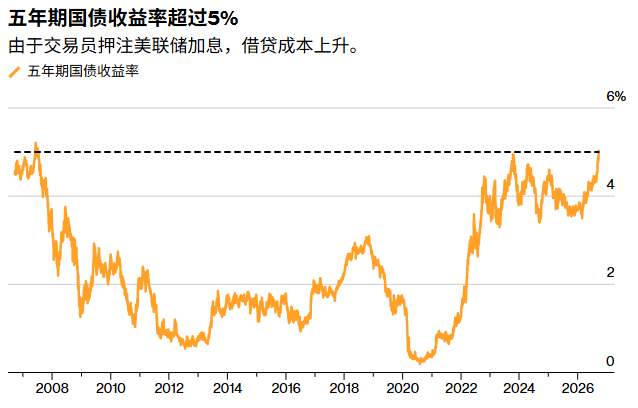
Warsh must also contend with pressure from bond markets. Over recent weeks, long-term Treasury yields have risen amid increased government borrowing, tech companies competing for capital, and growing skepticism about Warsh’s ability to rein in inflation. Compounding matters, Treasury Secretary Scott Bessent announced last week a plan to buy back long-dated U.S. Treasuries.
At 10 p.m., the final reading of the University of Michigan’s consumer confidence index for August will be released. Traders will closely watch the one-year and five-year inflation expectations components of the survey, as they could influence the Fed’s policy decisions. Also expected is the seasonally adjusted nonfarm payrolls report, with forecasts calling for an increase of 181,000 jobs—after a previous drop of 911,000.
Fed observers at JPMorgan, Apollo Global Management, and Morgan Stanley say Warsh has a chance to convince markets that controlling inflation remains his top priority.
Pria Misra, portfolio manager at JPMorgan Investment Management, said if he succeeds, “some of the concerns about the Fed’s credibility would ease.”
Tobias Schröder, chief economist at Apollo Global Management, told Bloomberg Television: “He needs to deliver a clearer message than he did during his July press conference.” While Schröder acknowledges Warsh doesn’t need to reveal the Fed’s next move on interest rates, he believes the chair should express views on inflation and labor market conditions to clarify his priorities.