Asian stocks fell as U.S. restrictions on China’s access to advanced AI chips and servers heightened caution ahead of Nvidia’s high-stakes earnings report.
The MSCI Asia Pacific Index fell 1.1%, with technology and financial stocks among the biggest decliners amid broad selling. S&P 500 futures were flat, while Nasdaq 100 futures rose 0.5%. On Monday, S&P 500 and Nasdaq 100 futures fell 1.9% and 2.7%, respectively, marking a third consecutive day of declines. The semiconductor stock index dropped 5.3%.
A temporary rule will require data center operators in Singapore, Malaysia, Thailand, Indonesia and Brazil to obtain a U.S. license if they need to export advanced AI chips made by Nvidia and other U.S. manufacturers to customers in those countries.
Shares of Chinese AI developers and data center operators plunged on concerns over restricted access to advanced computing power. However, domestic chipmakers rose as expectations grew that the restrictions would accelerate the development of local alternatives.
The recent sharp sell-off in tech stocks has made two events that could shape the near-term direction of AI-related trading even more important, and AI trading has been a key driver of global stock market gains this year. Nvidia’s earnings report on Tuesday will reflect chip demand and the impact of Jensen Huang’s departure, while Anthropic PBC’s expected listing later this week will test investors’ confidence in the trade amid deteriorating market sentiment.
According to people familiar with the matter, demand for Anthropic’s IPO is about seven times the number of shares being offered. Bankers are expected to set the IPO price on Wednesday, with shares set to begin trading on Thursday, in what could be the largest IPO in history.
In addition to tech stocks, investors are also weighing the outlook for U.S. interest rates after Federal Reserve officials hinted that another rate hike could come in December. Cleveland Fed President Beth Hammack said she favors small, steady rate increases, while Fed Governor Christopher Waller previously said a 0.5 percentage point rate hike could be possible if inflationary pressures worsen.
OCBC strategists wrote in a report: “We expect oil prices to fall in 2027, ultimately curbing inflation and thereby enhancing the appeal of U.S. Treasuries and yen-hedged AI deep corrections.”
Plugin Case Study
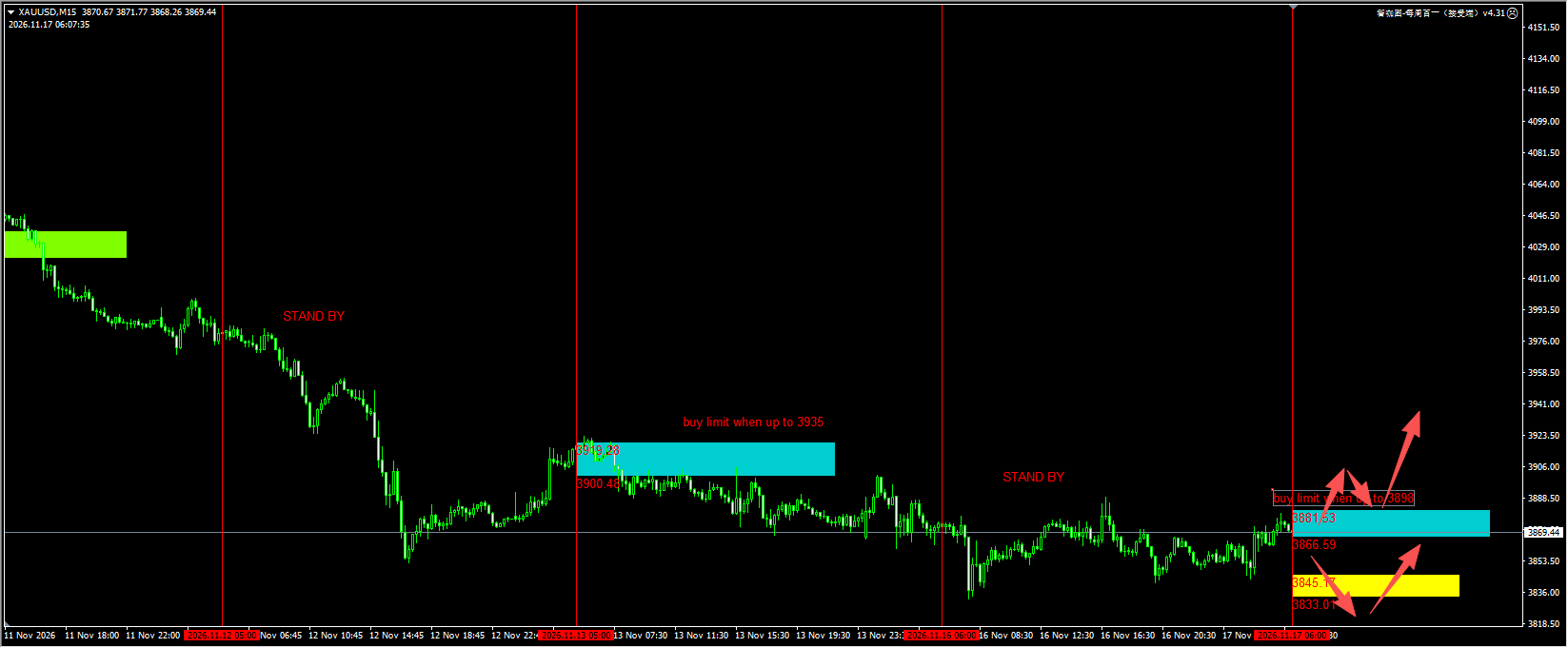
Gold: The decline in price has slowed for three consecutive trading days. Although U.S. stocks fell yesterday, gold remained range-bound between 3,830 and 3,880. We do not expect a rapid rally, but intraday, we can watch for a pullback buy after the price reclaims the 3,890–3,900 area; or wait for a liquidity sweep around 3,830 before looking for a rebound signal.
(Gold 15-minute chart)
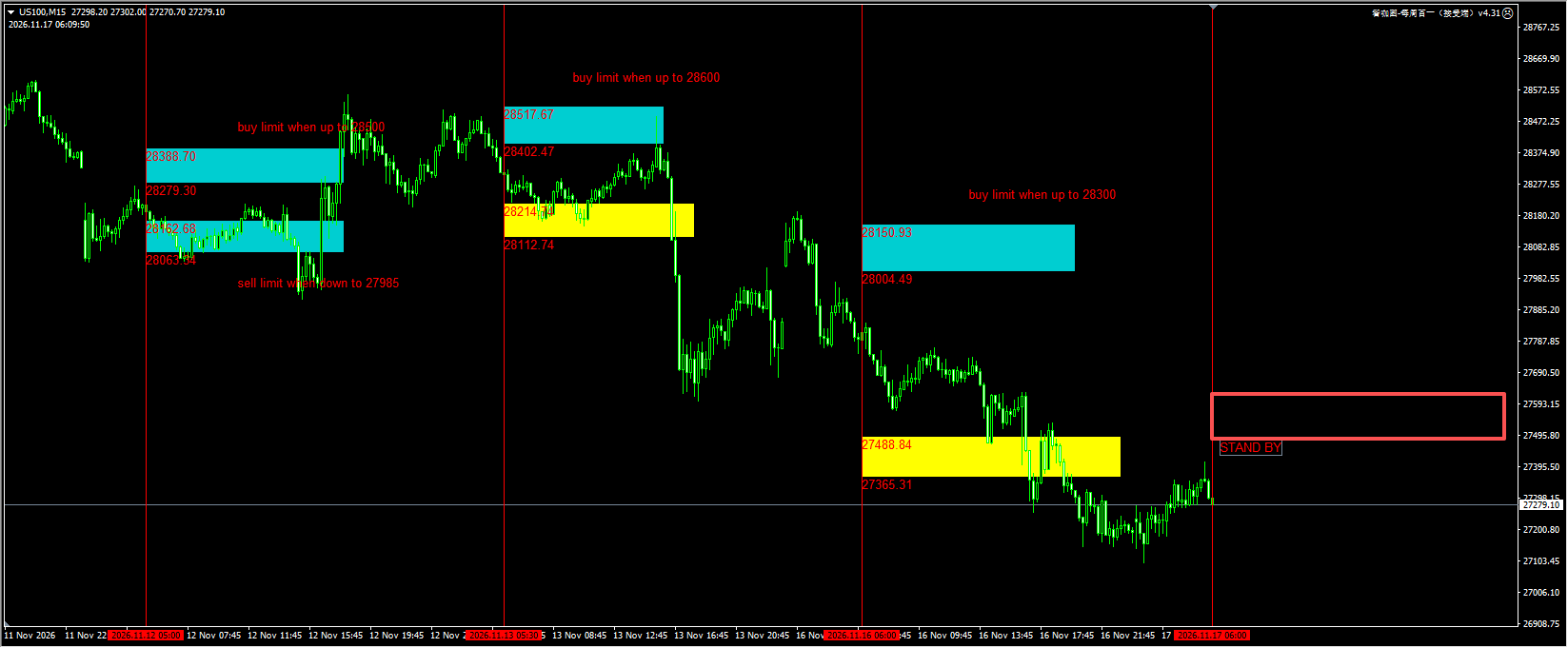
Nasdaq: Overnight, price continued to be weighed down by the Jensen Huang event, pulling back to stabilize near the 27,000 round number. However, resistance remains strong on the rebound, in the 27,500–27,600 area. If this area is not reclaimed and held, there is little room for further short-term upside. For now, we will remain on the sidelines intraday.
(Nasdaq 15-minute chart)
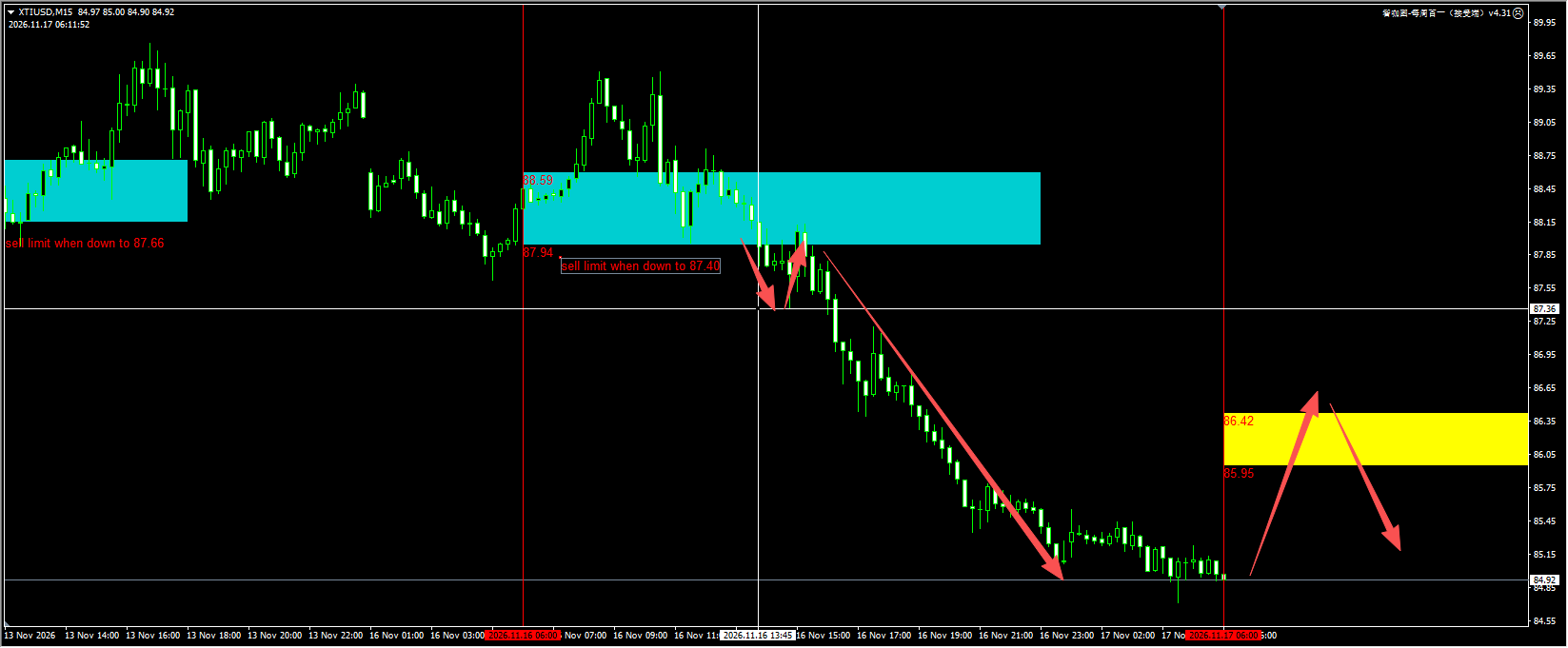
Crude Oil: Yesterday, in the blue area of our plugin, we arranged to sell limit on a pullback to the blue area after a break below 87.40. The price fell to 87.37, then rebounded into the blue area before plunging below 85. Our arrangement yesterday achieved a risk-reward ratio of nearly 5:1. Intraday, we will watch for a second decline after a sweep of the yellow area.
(Crude Oil 15-minute chart)
Key financial data and events to watch today:
21:30 U.S. October retail sales m/m
22:15 U.S. October industrial production m/m