This year, crude oil prices have dropped significantly due to a surge in supply from OPEC+ and its rivals, while global demand growth has slowed. Top forecasting agencies, including the International Energy Agency, predict a severe supply surplus next year. Even the OPEC Secretariat, which is usually more optimistic than other institutions, forecasts a small surplus.
According to three representatives, the OPEC+ member countries, which are scheduled to hold a video conference on January 4th, are expected to stick to the plan of suspending further production increases as more and more evidence indicates an oil surplus.
Before this, the industry authority, the American Petroleum Institute (API), reported that crude oil inventories rose by 1.7 million barrels last week. If the official data later on Wednesday confirms this figure, it will be the largest increase since mid-November. The API also found that inventories of gasoline and distillate oil also increased.
Amid escalating geopolitical tensions, the United Arab Emirates has announced its withdrawal of troops from Yemen. This comes after relations between the UAE and its Gulf ally Saudi Arabia soured again over the country’s military operations in the conflict-ridden Yemen. Both Saudi Arabia and the UAE are key members of OPEC.
On the other hand, traders are closely watching the partial blockade by the United States on the transportation of Venezuelan crude oil. President Donald Trump disclosed that the United States carried out a secret strike on a place he called a drug-smuggling facility, raising new questions about how far Washington is willing to go to pressure the regime of Nicolás Maduro.
Efforts led by the United States to end the war in Ukraine have also drawn much attention. Kremlin spokesman Dmitry Peskov confirmed on Tuesday that Russia would “strengthen” its negotiating position after what it said was an attack on the presidential residence. Ukrainian President Volodymyr Zelensky denied the accusation.
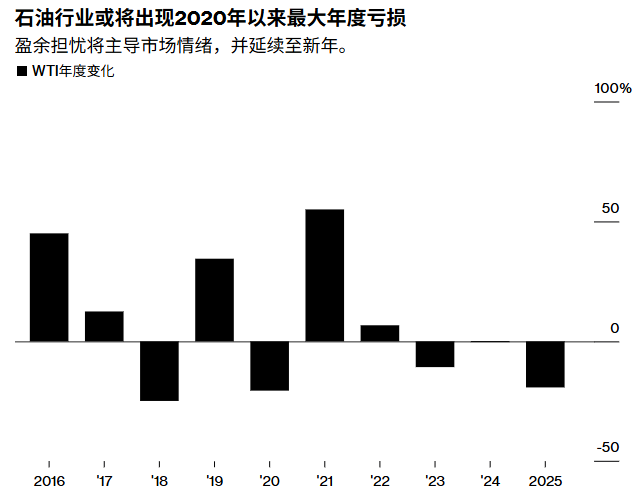
In 2020, oil prices suffered their steepest annual decline since the outbreak of the pandemic, as market concerns over an oversupply of oil dominating market sentiment and trading persisted into the new year.
The benchmark West Texas Intermediate crude oil price in the United States dropped below $58 per barrel, with the possibility of falling for the fifth consecutive month. The cumulative decline since the beginning of the year is close to 20%. The March Brent crude oil futures closed above $61 per barrel.
Traders’ recent focus has been on the upcoming OPEC+ meeting, a bearish US industrial report and a series of geopolitical tensions.