According to Bloomberg’s analysis of earnings reports, in the first half of the fiscal year ending in September, Nippon Life Insurance did not hedge against the risk of a stronger yen, when the currency was approaching its lowest level in 13 years.
The overseas investment portfolio holdings of the nine major insurance companies stood at 45.7%, showing little change from six months ago. In the six months ending September 2024, this proportion had dropped to 45.2%, the lowest level since 2011.
In the latest statistical period, net long positions in the Japanese yen held through forward contracts accounted for 27% of foreign exchange assets, roughly the same as in March. Positions in currency swaps and put options remained stable at 13.4% and 5.3% respectively.
“From a historical perspective, the hedging ratio remains low,” said Arun Chatrath, a macro strategist at Wells Fargo in New York. “We believe that the hedging ratio will rise in the coming quarters, which will support the strengthening of the yen.”
Given the recent weakening of the Japanese yen, traders are highly vigilant about the possibility of intervention by Japanese authorities, and the yen’s movement is closely watched. Therefore, the current position layout is of crucial importance. Insurance companies hold a total of 109 trillion yen (approximately 700 billion US dollars) in foreign securities. An increase in their hedging activities could stimulate yen buying, thereby alleviating the yen’s weakness.
The Japanese yen has been continuously falling over the past three months and is currently hovering around 155, approaching the level at which the authorities intervened in the market multiple times last year. The main reason for the yen’s weakness is market speculation that Prime Minister Kishida Fumio’s stimulus policies may push up inflation and increase the debt burden.
For insurance companies, the decision to maintain hedging against the appreciation of the yen was made after the hedging costs dropped to their lowest point in years. As the policy paths of the Bank of Japan and other major central banks narrowed, these costs also decreased.
According to an analysis by Bloomberg of data from the Bank of Japan and the Japan Securities Dealers Association, they sold about 849.7 billion yen worth of Japanese government bonds, compared with a previous sale of 388.1 billion yen. So far this year, Japanese government debt has fallen by about 5%, while the yield on global bonds hedged in yen is 1.7%.
“The most likely scenario is that the hedging ratio will gradually increase rather than undergo a sudden and comprehensive transformation,” said Akira Osumi, chief strategist at Mizuho Securities’ Tokyo branch. “Newly purchased foreign bonds are more likely to have a higher hedging ratio, and as existing hedges expire and are readjusted under more favorable cost conditions, existing positions can also be hedged more actively.”
Technical analysis:
The WeChat functions may be restricted from time to time. If you want to experience the plugin, please leave your contact information when adding a friend so that we can add you back easily!!!
Gold: The green buy limit area we alerted yesterday performed perfectly, delivering a profit-to-loss ratio of more than 2:1. After breaking through 4217, the price failed to maintain the momentum to break through further, which led to the ineffectiveness of our strategy in the blue area. For today’s trading, we will continue to monitor whether the price can recover the overnight resistance at 4210/20. Only after confirming the recovery can we attempt a long position. For detailed positions, please consult the plugin.
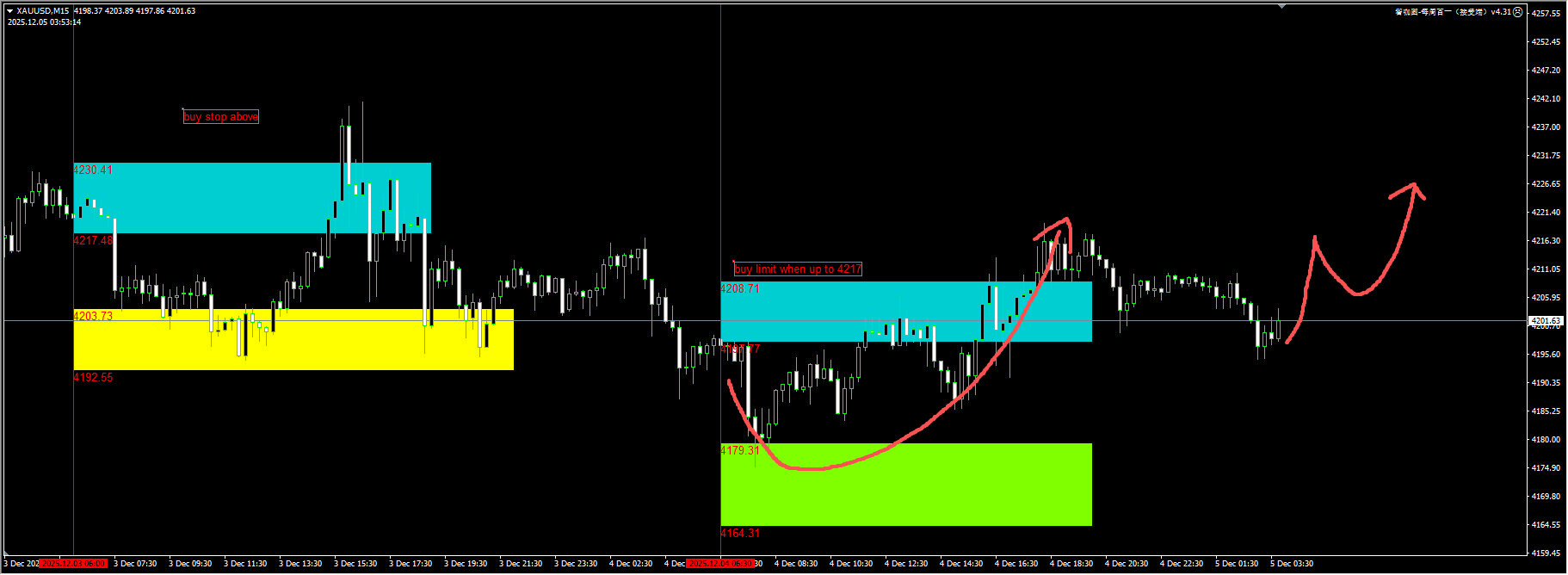
(Gold 15-minute chart)
The plugin is updated from 12:00 to 13:00 every trading day. If you want to experience the same plugin as shown in the chart, please contact V: Hana-fgfg and leave your contact information for us to get back to you.
Nasdaq: The blue buy stop we alerted yesterday through the plugin only achieved a profit-to-loss ratio of about 1:1. However, the low liquidity sweep in the yellow area below did occur as expected. For today’s trading, we will focus on whether the overnight supply zone resistance at 25,680 can be effectively broken through. Only after a breakthrough will we consider a long position. For detailed positions, please consult the plugin.
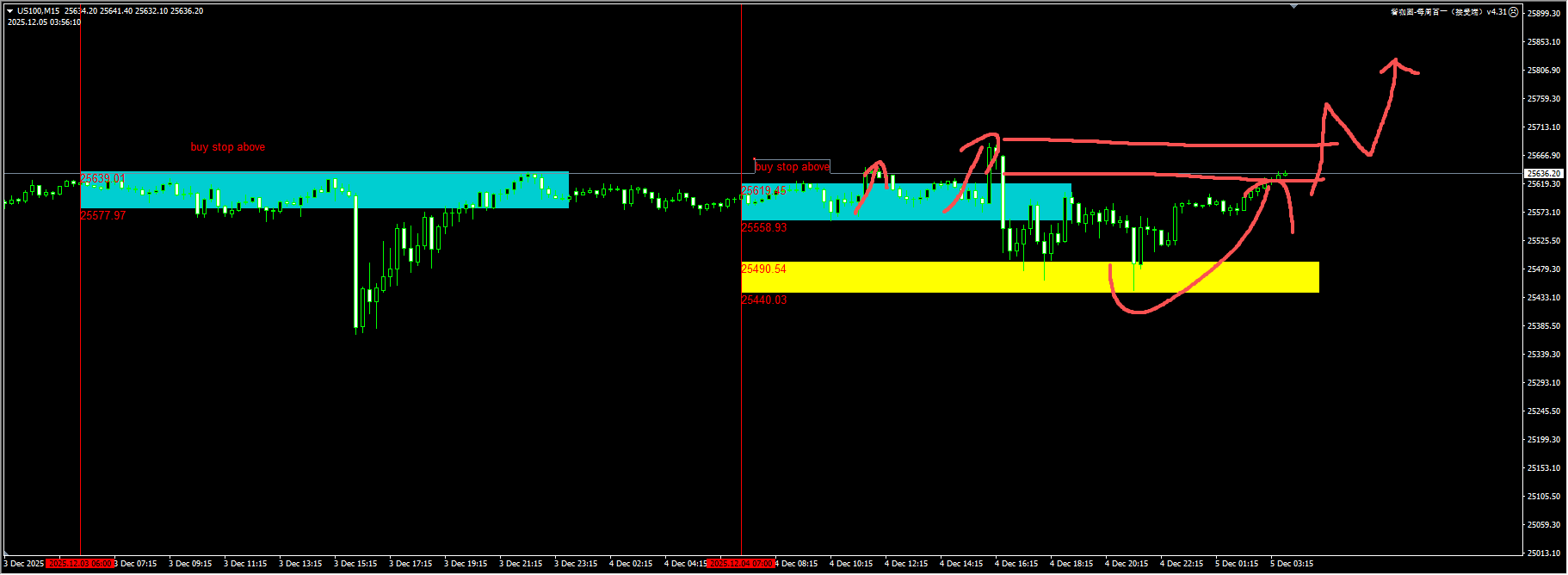
(NASDAQ 15-minute chart)
The plugin is updated from 12:00 to 13:00 every trading day. If you want to experience the same plugin as shown in the chart, please contact V: Hana-fgfg and leave your contact information in the message for us to get back to you.
Crude oil: Yesterday, the buy stop in the blue area of our plugin performed averagely with a few false signals. For today’s trading, we suggest paying attention to the pullback in the demand zone between 59.20 and 58.80 and considering one buy limit operation. For detailed positions, please consult the plugin.
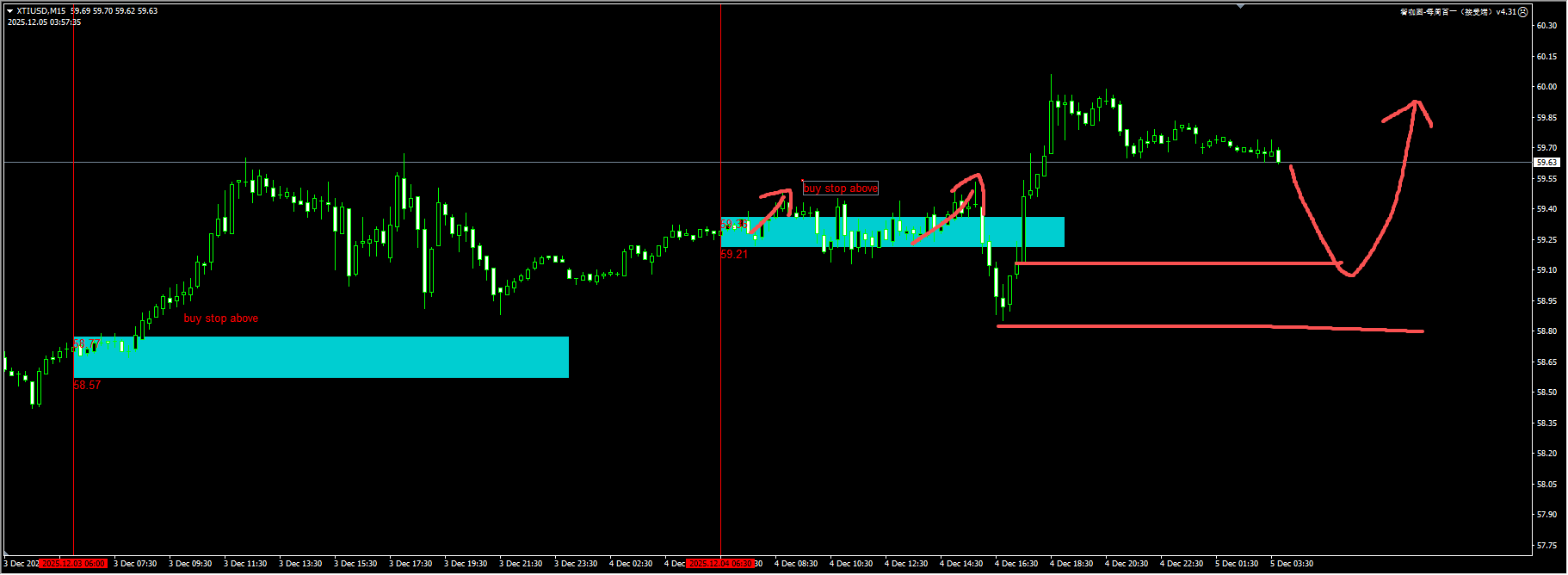
(Crude Oil 15-Minute Chart)
The plugin is updated from 12:00 to 13:00 every trading day. If you want to experience the same plugin as shown in the picture, please contact V: Hana-fgfg and leave your contact information in the message for us to get back to you.
Today’s key economic data and events to focus on:
23:00 U.S. Personal Consumption Expenditures for September