As US-China relations swing between escalation and de-escalation, some local officials in the United States are conducting their own diplomatic activities to ensure access to the world’s second-largest market.
Out of concern that geopolitical competition could lead to export losses, regional leaders from states including Washington and Oregon have visited China in recent weeks and held meetings with Chinese officials. Their aim is to preserve local jobs by maintaining current ties, hoping that the economy will eventually recover or avoid potential negative impacts in the future.
“I believe the situation will calm down, but when it does, having established this partnership and relationship in advance will make it easier for us to recover and rebuild,” Washington State Commerce Secretary Joe Nguyen said in an interview with Bloomberg News on Thursday.
Mr. Ruan made the above remarks during his attendance at the Import Expo in Shanghai, where he met with local officials and business representatives. He is the first commerce secretary of the state to visit China since 2019. The state is an important manufacturing base for Boeing.
His visit is not an isolated act. A few weeks ago, Oregon Senate President Rob Wagner led a delegation to visit ten cities and met with Chinese Vice President Han Zheng at the last stop of the visit. Wagner told Chinese official media that Oregon will continue to be committed to cooperating with China.
Although many states have adopted more aggressive policies than the federal government to restrict Chinese investment, this parallel approach also highlights the divergence of interests within the United States when it comes to dealing with its main competitor.
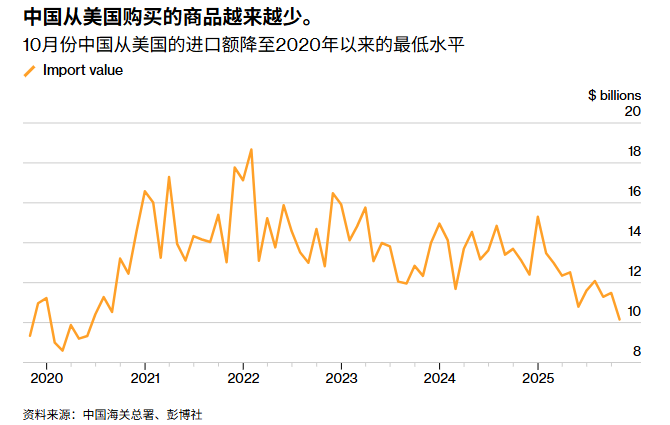
For some people, this calculation stems from simple economic principles. China is Washington State’s largest export market, with aerospace products and agricultural products being its main export items – and it is also Oregon State’s second-largest export market.
“I see some governors getting nervous,” said Shaun Steen, president of the US-China Business Council, in an interview with Bloomberg Television on Thursday. The US-China Business Council previously estimated that nearly one million US jobs depend on exports to China.
Stan said, “We see state governors beginning to think about how to continue and protect those jobs related to exports to China.” He also added that he expected the states in the US to take more proactive measures to deal with this issue.
For local officials, they are concerned that despite the recent ceasefire agreement, the tensions between the two capitals could still lead to economic consequences.
China also agreed to expand its purchase of agricultural products and remove tariffs on some US agricultural products, but the negotiations did not resolve the core differences between the two countries.
Mr. Ruan said, “Once you lose trading partners due to geopolitical issues, it’s very difficult to win them back. So I think it’s crucial for us to step up and maintain these relationships.”