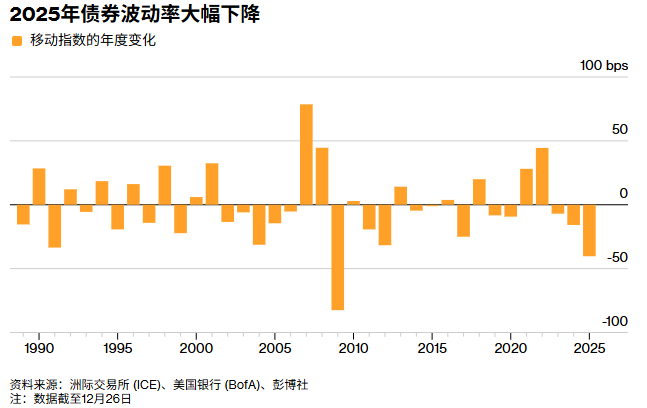
The indicator measuring the volatility of the US bond market is on track for its biggest annual decline since the financial crisis, as the Fed’s rate cuts have eased the risk of a recession.
The ICE BofA MOVE index, which gauges expected bond market volatility, dropped to around 59 on Friday, the lowest level since October 2021. The index has fallen from around 99 at the end of 2024 to its current level and is on track to post one of the steepest annual declines on record, second only to the plunge in 2009.
Since President Trump’s global tariff policy triggered market turmoil in April, the volatility of bonds, currencies and stocks has all been on the decline. A series of favorable economic data, including the strongest third-quarter GDP growth in two years, as well as measures taken by central banks to safeguard the labor market, have all helped to reduce the uncertainty in financial markets.
John Briggs, head of US rates strategy at Natixis Corporate and Investment Banking, said, “We haven’t really seen any negative data that could cause significant market volatility,” and noted that market volatility is typically “very low” at this time of year.
Since September last year, as the labor market has cooled, the Federal Reserve has cut interest rates three times in a row. Bond traders expect the Fed to lower rates twice more by 25 basis points each in 2026, with the first cut expected at the June meeting.
Markets Live’s macro strategist Brendan Fagan said that although the timing remains controversial, the Fed’s easing policy trajectory is now largely clear. The consensus on Wall Street still centers on a reduction in policy rates in 2026 and a slightly steeper yield curve, a configuration that can coexist with lower market volatility, even as debates over the persistence of inflation, the sustainability of growth, and fiscal risks continue.
Due to the lack of data that could influence market trends within a week before and after the Christmas and New Year holidays, trading activities have decreased in recent days and the market has become calm.
Briggs expects volatility to remain low until the New Year. Briggs said, “January can sometimes bring surprises or challenge widely held views.”