US President Donald Trump said he would waive sanctions related to oil, have the US Navy escort oil tankers through the Strait of Hormuz, and predicted that the war with Iran would be “quickly” resolved. Meanwhile, he is facing growing economic and political pressure, as well as the sharp fluctuations in the oil market in recent days.
The president said he did not think the conflict would end this week, but he insisted that the operation was going well, had been completed ahead of schedule and hoped this would boost the confidence of investors who were increasingly worried about energy prices. He also vowed that if Iran disrupted oil supplies, the United States would “step up the bombing”.
Trump said at a news conference at his resort in Doral, Florida: “We are working to control oil prices. Oil prices have been artificially pushed up due to this market fluctuation.”
Trump said he could waive “certain oil-related sanctions to lower oil prices,” but provided no further details beyond acknowledging that he had discussed the matter with Russian President Vladimir Putin earlier on Monday. Russia’s vast oil industry is subject to a series of restrictions, including a cap on crude oil prices and US sanctions against its two major oil producers, aimed at depriving Russia of revenue from the war in Ukraine.
According to informed sources, Trump is considering a series of measures to deal with the soaring oil prices after a potential war with Iran. These measures may include tapping into emergency reserves, suspending the federal fuel tax (though this would require congressional approval), and the US Treasury Department’s intervention in the oil futures market. Treasury Secretary Scott Bessent previously hinted that the US might further exempt Russia from oil sanctions. Last week, the US temporarily allowed Indian refiners to purchase more Russian oil.
Although US officials have repeatedly insisted that they can continue this conflict indefinitely, Trump’s remarks highlight a new willingness by the White House to publicly indicate that it may soon take action to try to end the hostilities.
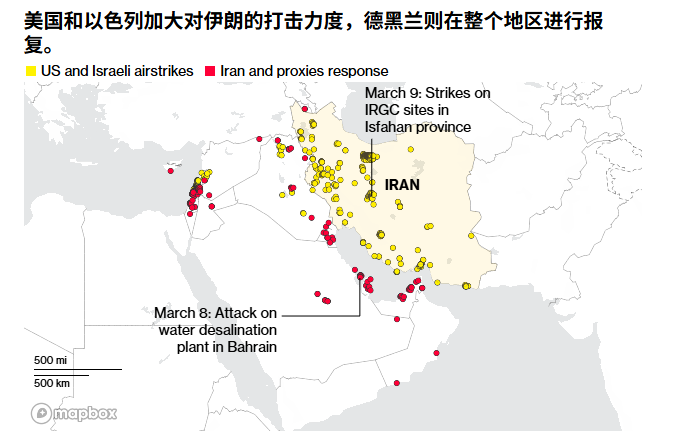
“We, together with our Israeli partners, have crushed the enemy with overwhelming technological and military power,” Trump told Republican lawmakers earlier on Monday. At a news conference, the president claimed that the United States had struck 5,000 targets in Iran, reducing the country’s missile capacity by 90% and the number of drone launches by 83%. Trump said that the military objective of the United States could be said to be “basically completed”.
At the same time, Trump acknowledged that there are still some unanswered questions about the leadership in Tehran and vowed not to let up “until the enemy is thoroughly and decisively defeated”. The president said that although the US has sunk more than 50 Iranian vessels, if the conflict continues, the US might bomb more “important targets”, including power generation facilities.
He said, “We have achieved victories in many aspects, but it’s not enough. We will move forward more firmly than ever before to strive for ultimate victory and bring this protracted crisis to a complete end.”
These comments highlight the challenges Trump will face in the future. He needs to reconcile his promise of a complete victory with the economic and political consequences of continuing the war.
Trump told CBS that with the increasing traffic of ships through the Strait of Hormuz, he is “considering controlling the strait.” It is not yet clear what specific actions the president is considering.
The US president, already worried about the persistent domestic inflation, now has to deal with the rising gasoline prices as the November midterm elections are approaching, and there is no sign of easing in the Iran nuclear crisis. On Sunday, he said that the $100-per-barrel oil price is “a negligible cost” and that “once the Iran nuclear threat is eliminated, the oil price will drop rapidly.”
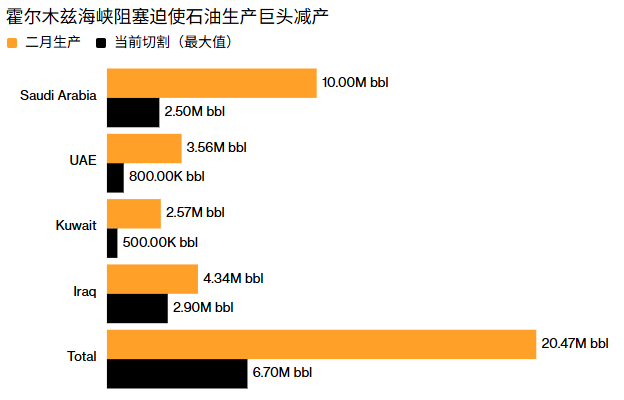
According to a person familiar with the matter, the actual closure of the Strait of Hormuz has forced the world’s largest oil exporter, Saudi Arabia, to cut production. Previously, the United Arab Emirates, Kuwait and Iraq also took similar measures.
Trump warned Iran on Monday not to block oil shipments through the Strait of Hormuz, saying that if Iran did so, “the United States would strike them harder than ever before, twenty times as hard as it has done so far.”
Furthermore, we will destroy those targets that are easy to destroy, which will make it almost impossible for Iran to be rebuilt as a nation again – death, fire and wrath will befall them – but I hope and pray that this situation will not occur!