Japanese Finance Minister Kaoru Yosano said that Japan has the right to take bold actions against exchange rate fluctuations that do not reflect the fundamentals. This was her strongest warning to speculators so far after the yen weakened despite the interest rate hike.
In an interview with Bloomberg, Kazuyuki Katayama said, “These moves are clearly not based on fundamentals but are speculative.” She was referring to the sharp depreciation of the yen last Friday. “We have made it clear that we will take decisive action against such moves, as stated in the joint statement by the finance ministers of Japan and the United States.”
After Kato’s speech, the yen strengthened, briefly falling below 157 yen to the dollar. In early trading on Friday in Tokyo, the yen was trading at around 156.86 yen to the dollar.
While hinting at a possible direct intervention in the currency market, Katakura also mentioned the possibility that Japan’s financial predicament could worsen in the short term, as Prime Minister Koike’s government is pushing for stronger economic growth, which is another key point of concern for investors.
The yen weakened after the Bank of Japan raised borrowing costs to their highest level in 30 years, and speculation resurfaced that the Japanese Ministry of Economy might intervene in the foreign exchange market. Katakura Masayoshi made these remarks against this backdrop. The yen’s decline was further exacerbated by remarks made by Bank of Japan Governor Masaaki Shirakawa at a press conference following the decision, as he did not send a stronger signal about another rate hike, which disappointed some market participants.
The finance minister’s reference to the joint statement with the United States indicates that she has received tacit approval from Washington to take action if necessary without further negotiations.
Her predecessor, Katsunobu Kato, and US Treasury Secretary Scott Bessent signed a currency cooperation agreement in September. The statement outlined the commitment of both countries to letting the market determine exchange rates, while confirming that there is still room for intervention in certain circumstances, such as during periods of excessive exchange rate volatility.
“This means we can move freely,” said Katayama.
The Japanese Ministry of Finance spent approximately 100 billion US dollars last year to support the yen exchange rate, when the yen was hovering around 160 against the US dollar. It is expected that by 2025, the yen will still be the worst-performing currency against the US dollar among the Group of Ten (G10) currencies.
Katahira declined to comment on the current foreign exchange level and added that there are no specific criteria for what constitutes excessive or disorderly fluctuations.
She said, “Each situation is different, so it’s unrealistic to expect the same pattern every time.” She was referring to the changes in the department’s intervention strategy. Former senior monetary policy official Masato Kanda said last year that a 10-yen fluctuation in the yen’s exchange rate within a month might be considered too rapid.
When asked whether the authorities would intervene in the market as the holiday approaches and trading volume is expected to decline, Katayama said, “We are always fully prepared.”
Technical analysis:
The functions of WeChat are subject to occasional restrictions. If you want to try the plugin, please leave your contact information when adding a friend so that we can add you back easily!!!
Gold: The dollar’s fall to around the 98 mark has led to a rise in commodities and non-US currencies. While we keep an eye on a direct break through today, we also remain attentive to the liquidity sweep at the 4450 level. For detailed positions, please consult the plugin.
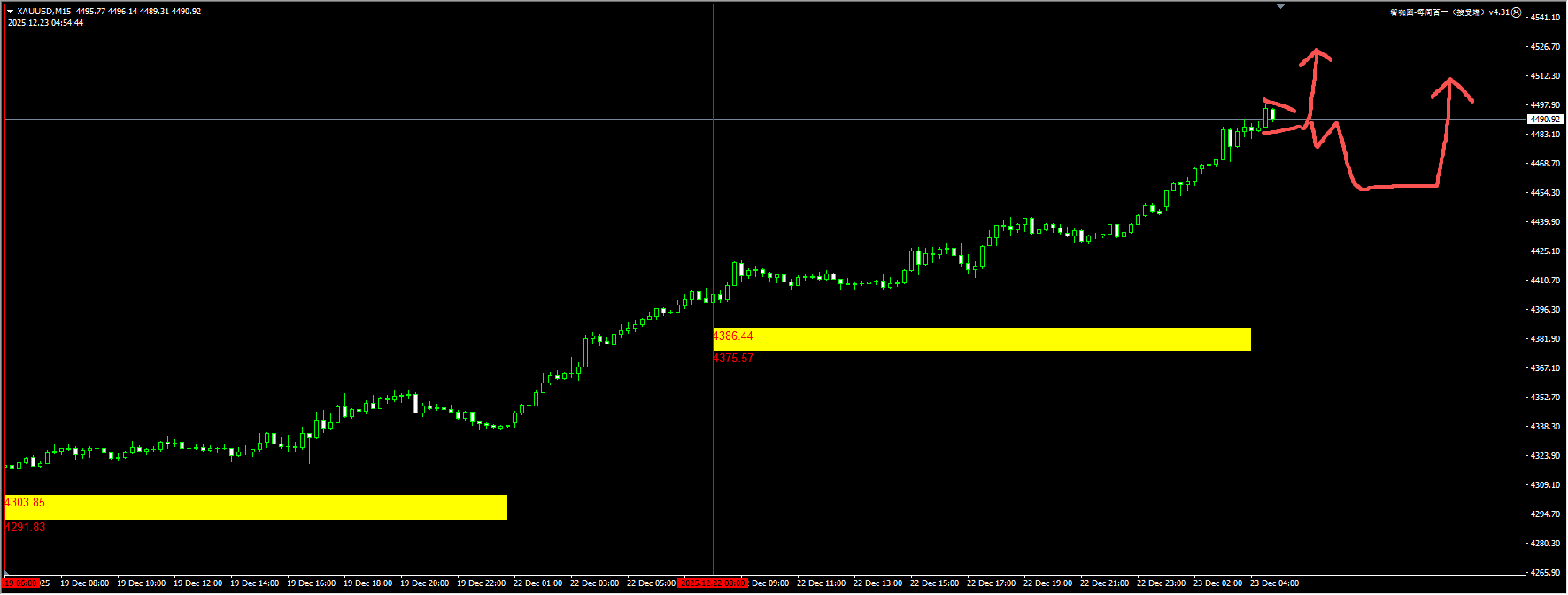
(Gold 15-minute chart)
The plugin is updated from 12:00 to 13:00 every trading day. If you want to experience the same plugin as shown in the chart, please contact V: Hana-fgfg and leave your contact information for us to get back to you.
The Nasdaq rebounded and recaptured the 25,200/25,300 level as inflation data further eased and the Bank of Japan’s attitude remained relatively moderate after its interest rate hike. However, with the Christmas week approaching, trading volume may weaken. We will continue to wait for low liquidity before starting to capture the rebound signal. At the same time, we also reserve the opportunity for a direct breakthrough. For detailed positions, please consult the plugin.
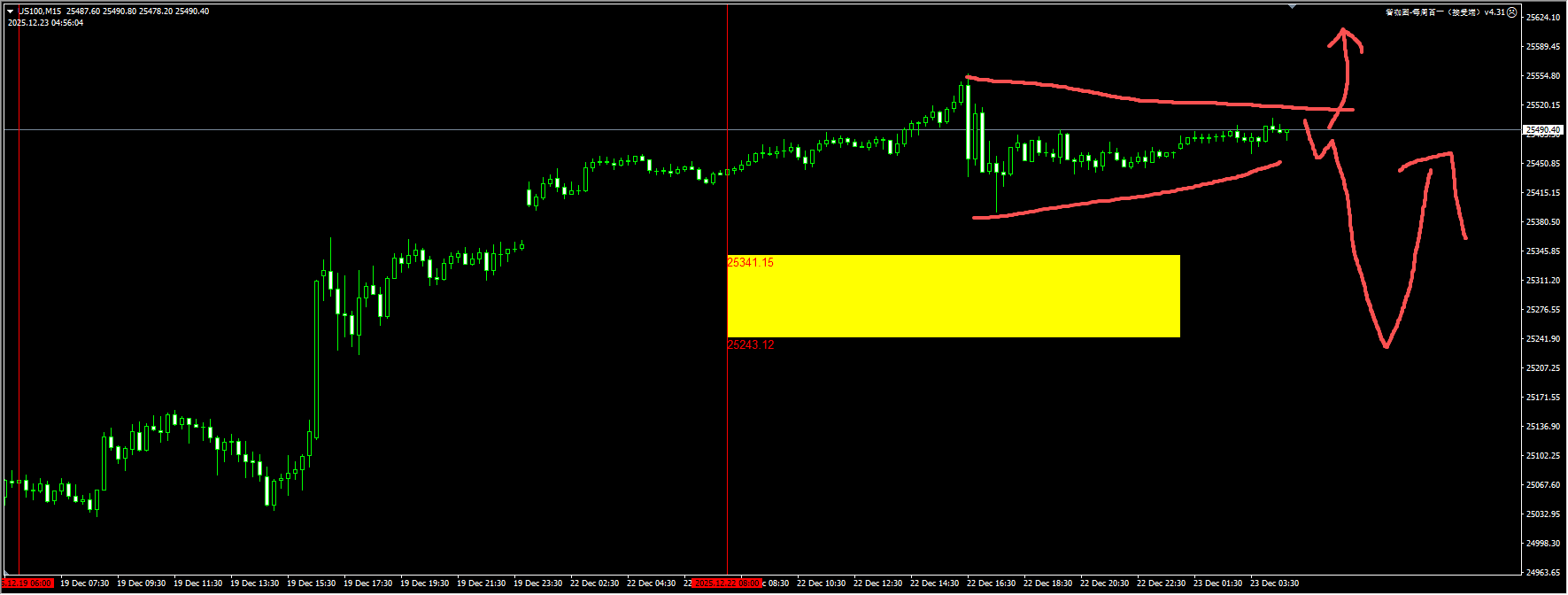
(NASDAQ 15-minute chart)
The plugin is updated from 12:00 to 13:00 every trading day. If you want to experience the same plugin as shown in the chart, please contact V: Hana-fgfg and leave your contact information in the message for us to get back to you.
Crude oil: The green buy limit area we alerted yesterday through the plugin performed perfectly, allowing for a profit-to-loss ratio of over 3 times. The price range was narrow today, so be sure to catch the first wave of the breakout. For detailed positions, please consult the plugin.
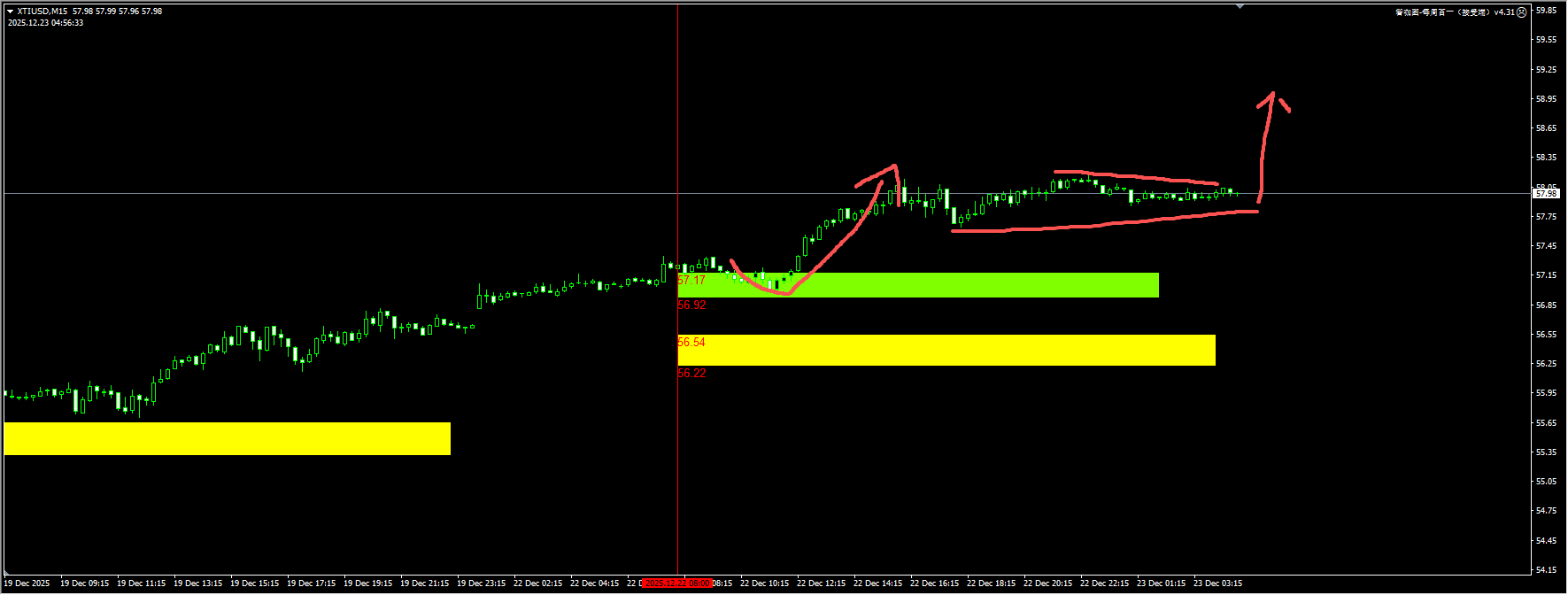
(Crude Oil 15-Minute Chart)
The plugin is updated from 12:00 to 13:00 every trading day. If you want to experience the same plugin as shown in the picture, please contact V: Hana-fgfg and leave your contact information in the message for us to get back to you.
Today’s key economic data and events to focus on:
20:30 US Preliminary Personal Consumption Expenditures Price Index for Q3 (Annualized Quarterly Rate)
21:30 US Durable Goods Orders (MoM) for October (Preliminary)
21:30 U.S. Q3 Preliminary Real GDP (Annualized Quarterly Rate)
23:00 US Conference Board Consumer Confidence Index for December