Richmond Federal Reserve Bank President Tom Barkin warned that inflation is too high, but he sees some early signs that price pressures may ease soon.
“These numbers are too high,” Ba Jin said in an interview with Bloomberg on Sunday during the Aspen Ideas Festival in Aspen, Colorado.
A report released on Thursday showed that the Federal Reserve’s preferred gauge—the personal consumption expenditure index—rose 4.1% over the year ending in May, the largest increase since April 2023. While the Iran war has pushed up oil and other commodity prices, the rise in price pressures has been more widespread.
Barkin added, “It’s hard to believe inflation will return to a 2% level without the influence of federal funds rates, the labor market, or other factors contributing to deflation.”
The Richmond Fed president expressed relief at the rapid decline in gasoline prices in his region, driven by falling oil prices following the recent ceasefire agreement between the U.S. and Iran. However, he noted that other factors are also contributing to inflation, including investments in artificial intelligence infrastructure. He emphasized the need to monitor economic trends over the coming months to determine the appropriate policy direction.
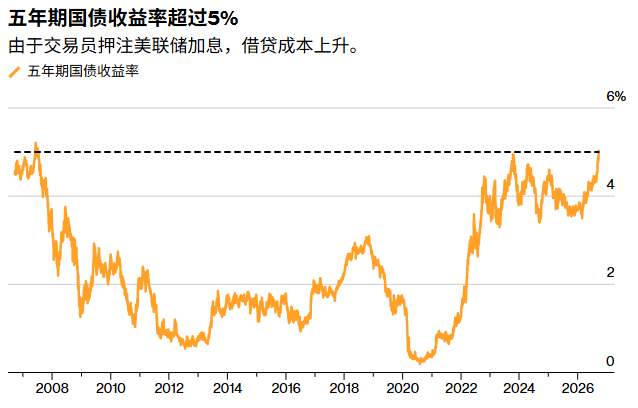
Federal Reserve officials kept the federal funds rate unchanged at their meeting earlier this month. An increasing number of policymakers have warned that the Fed may need to raise interest rates this year to reverse the upward trend in inflation.
Some of Bajin’s colleagues are particularly concerned about rising service prices, as inflation in the services sector tends to be more persistent. Additionally, there is worry that after inflation has remained above the Federal Reserve’s 2% target for over five consecutive years—and become a widely discussed topic nationwide—consumer inflation expectations may be affected, making it harder for the Fed to restore price stability.
Barkin said that price pressures from tariffs and oil shocks are likely easing at the moment, helping to cool inflation. At the same time, however, neither of these factors appears to be curbing American spending, which has remained strong over the past year. In a consumption-driven economy, this could pose resistance to achieving the Federal Reserve’s 2% inflation target.
Balkin also expressed concern about corporate behavior in the current inflation environment.
Bakhytzhan said, “Companies take current inflation rates into account when setting prices, so I believe inflation has a certain degree of persistence. I am genuinely concerned about this, which is why I think it’s reasonable to moderately control inflation.”
He said that companies are facing higher input costs, but at the same time they have observed consumer resistance to higher prices, which limits how much of these increased costs they can pass on to consumers.
During a recent trip to western Virginia, company executives told Baking that they had not yet decided on next year’s employee pay increase. Baking said that when gasoline prices were rising, they thought they might need to raise salaries more than in previous years, but now that oil prices have dropped, they may no longer need to do so.