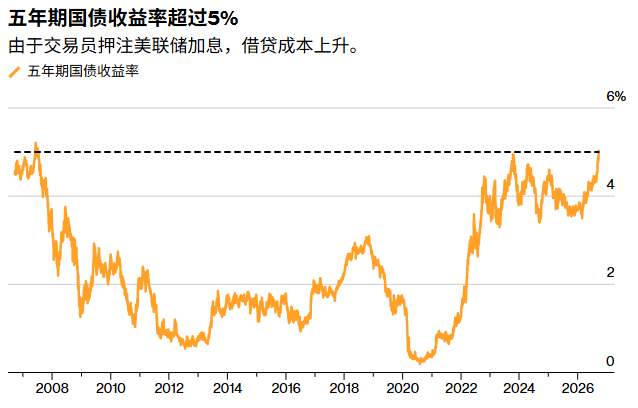
BMO Capital Markets believes that betting on the continued strength of the dollar is the most straightforward way for forex traders to position themselves in an environment of renewed high interest rates and inflation.
BMO’s chief foreign exchange strategist, Mark McCormick, wrote in a report on Monday that forex market traders—whose daily trading volume reaches $9.5 trillion—are “too eager” to factor in the resolution of the U.S.-Iran conflict. He said oil prices could decline after the conflict ends, but inflationary effects would persist, pushing up global interest rates and slowing economic growth, which would benefit the dollar.
“Even if oil prices were to decline slightly—a big unknown— inflation is unlikely to fall quickly; second-round effects are intensifying, and correlations are shifting increasingly in favor of rising interest rates and a stronger dollar, rather than the market’s prevailing optimism,” said McCormick.
BMO is generally bullish on the dollar, particularly against the euro, pound, and yen. The McCormick team also expects the dollar to strengthen against the Australian and Canadian dollars.
The U.S. dollar index has risen by about 2% since the United States and Israel began bombing Iran in late February. Although the conflict has disrupted global energy flows and harmed oil-importing countries, the U.S. has weathered the impact of rising energy prices and released strong economic data. After employment growth in the U.S. exceeded all expectations in May, traders have fully priced in the expectation that the Federal Reserve will raise interest rates by year-end.
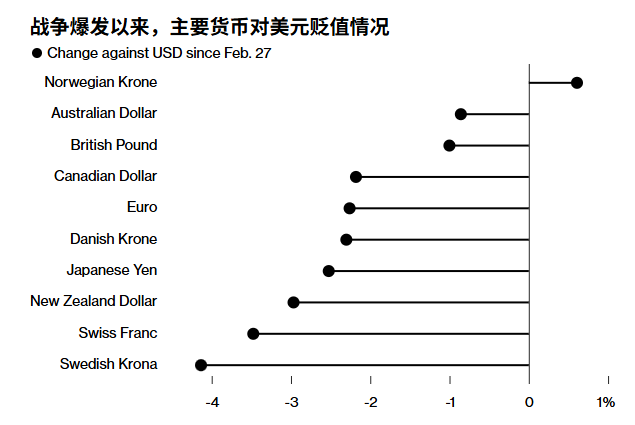
On Friday, the Bloomberg Dollar Spot Index posted its best single-day performance in over two months following the release of the employment report; meanwhile, the U.S. two-year Treasury yield—the rate most sensitive to changes in Federal Reserve expectations—registered its largest one-day gain since President Donald Trump imposed tariffs on most of America’s trading partners in April last year.
The index edged lower on Monday, after rising 1.1% the previous week.
Consumer prices are accelerating globally and in the United States. Inflation in the eurozone surpassed 3% in May, reaching its highest level since 2023, providing further justification for interest rate hikes despite the region’s economic challenges.
The U.S. will release its May inflation data on Wednesday, with the median forecast for the annualized inflation rate at 4.2%, up from 3.8% in the previous month.
He said, “We believe that rising interest rates, slowing economic growth, and increasing macroeconomic divergence will remain more enduring trends—under the current evolving economic environment, these factors are likely to continue supporting the dollar and driving strong performance in U.S. assets. Headlines are just noise; the underlying economic conditions are the key signals.”
Given the resilience of the U.S. economy amid high oil prices, market expectations for a Federal Reserve rate hike appear more solidified. This supports expectations of higher neutral interest rates and rising inflation in the coming months, which could help the dollar overcome the negative impact of geopolitical tensions.